• Home
  • About
  • Van Gogh Art
  • Van Gogh Biography
  • Contact Us

Van Gogh Blog

  • 22
    Dec

    Van Gogh Exhibitions 2012


    Despite the fact that during his lifetime, Vincent van Gogh was not able to share his artwork with a large audience, today crowds of people will travel great distances to get a glimpse of his works in museums and special exhibitions.  2011 was an impressive year for Van Gogh exhibitions, and 2012 promises to be just as remarkable.  Next year Van Gogh fans will have some exciting opportunities to see the artist’s works at many different museum locations around the globe.  From Geona to Denver, the following is a list of Van Gogh exhibitions in 2012.  If you know of a Van Gogh exhibition in 2012 that is not on this list, please feel free to comment and share it with us.

    Date Exhibition Title Museum City Country
    November 12, 2011 – April 15, 2012 “Van Gogh and Gauguin’s Journey” Palazzo Ducale Genoa Italy
    February 1 – May 6 “Van Gogh Up Close” Philadelphia Museum of Art Philadelphia USA
    February 24 – June 17 “Dreams of nature. Symbolism from Van Gogh to Kandinsky” Van Gogh Museum Amsterdam The Netherlands
    May 25 – September 3 “Van Gogh Up Close” The National Gallery of Canada Ottawa Canada
    July 14 – October 14 “Van Gogh to Kandinsky: Symbolist Landscape in Europe 1880-1910” The National Gallery of Scotland Edinburgh Scotland
    September 29 – February 3 “Van Gogh in the Hermitage Amsterdam”  The Hermitage Amsterdam Amsterdam The Netherlands
    Oct 21 – Jan 20 “Becoming Van Gogh” Denver Art Museum Denver USA

    Filed under - Van Gogh Exhibits, Van Gogh News No Comments so far. Add yours now

  • 02
    Dec

    The Potato Eaters


    One of Van Gogh’s famous earliest works is The Potato Eaters.  What many people do not realize, though, is that not only did Van Gogh do more than one painting of The Potato Eaters, but he also did studies, drawings, sketches and graphic works of this subject.   Van Gogh spent a great deal of time working on perfecting The Potato Eaters as he hoped it would be his breakthrough painting. 

    In April of 1885, Van Gogh was living in Nuenen and was working on The Potato Eaters when he wrote the following to his brother Theo,

    “I want to tell you that I am working on the potato eaters, and I have painted new studies of the heads; the hands especially are greatly changed.

    What I am trying to do most is to bring life into it.”

    Later in the month he again wrote to his brother Theo about the painting stating,

    “Though the actual painting will have been completed in a comparatively short time, and largely from memory, it has taken a whole winter of painting studies of heads and hands.”

    Van Gogh experimented with color and was still learning painting techniques.  His goal was to not only improve as a painter, but in this work in particular to capture the true peasant life.  In the same letter he went on to say,

    “The point is that I’ve tried to bring out the idea that these people eating potatoes by the light of their lamp have dug the earth with the self-same hands they are now putting into the dish, and it thus suggests manual labour and – a meal honestly earned.”

    Today one of Van Gogh’s paintings of The Potato Eaters can be seen at the Van Gogh Museum in Amsterdam.  The other painting of The Potato Eaters is located at the, Kröller-Müller Museum in Otterlo, The Netherlands.

    Find more information about The Potato Eaters.

    View more of Van Gogh’s Potato Eater works below:

    Letters Source:
    http://www.webexhibits.org/vangogh/letter/15/404.htm

    http://www.webexhibits.org/vangogh/letter/15/403.htm

    The Potato Eaters The Potato Eaters
    Study for The Potato Eaters Five Persons at a Meal
    Potato Eaters

    Filed under - Van Gogh Paintings No Comments so far. Add yours now

  • 17
    Nov

    Van Gogh’s Harvest


    This time of year, we celebrate the harvest and reap the benefits of the year’s hard work.  Van Gogh frequently wrote about harvest time in his letters, and he often compared the harvest season to his own work and how he would someday get back all that he put into it.  In a letter to his brother Theo from September 9, 1882 he wrote:

    “I wish you could walk here some evening in this splendid autumn wood. What I bring back from it this year will be just a scanty harvest. However, I hope to bring a few things, and in time it will grow more and more.”

    Van Gogh also appreciated the beauty of harvest time and became wrapped up in nature and absorbing the changes taking place around him.  On September 19 of 1882, he wrote the following to his brother Theo,

    “Sometimes I long for harvest time, that is, for the time when I shall be so imbued with the study of nature that I myself can create something in a picture.”

    By the spring of 1883, Van Gogh was referring to his studies as the seeds from which he would grow great works.  He used this metaphor in a letter to his brother Theo when stating,

    “Well, the main thing for me to do now is to see to it that the quality of the seed (namely the drawings themselves) improves; it may take more time, but if the harvest is better for it, I am satisfied – I always have my eye on that harvest.”

    Van Gogh did master drawing and, it was this skill that in turn helped him to produce great paintings as well such as the ones below which he harvested only a few years later.

    Harvest in Provence Wheat Field with Reaper and Sun
    Wheat Field Behind Saint Paul Hospital with a Reaper Harvest at La Cra, with Montmajour in the Background

    Letters Source:

    http://www.webexhibits.org/vangogh/letter/11/229.htm
    http://www.webexhibits.org/vangogh/letter/11/233.htm
    http://www.webexhibits.org/vangogh/letter/12/277.htm

    Filed under - Van Gogh Drawings, Van Gogh Landscapes, Van Gogh Letters, Van Gogh Paintings No Comments so far. Add yours now

  • 10
    Nov

    Van Gogh Shoes


    From 1886 to 1888, Van Gogh was living in Paris. It was during this time that he created many still life paintings; a lot of these were of fish or fruit, but there were several paintings he created of shoes. One of the most notable shoe paintings that Van Gogh created was A Pair of Shoes, 1886 (shown below – top left). This painting was discussed in an essay titled “The Origin of the Work of Art” by Martin Heidegger in the 1930s and has since been the subject of many debates surrounding art and life.

    Another reason that the shoe paintings still fascinate individuals today is that these works are also often interpreted as a study of Van Gogh’s life. In these paintings, he captures a pair or pairs of shoes on the floor most with laces untied as if they have just been taken off at the end of a long day. Unlike other still life subjects, the shoes have been to all the places and have seen all of the struggles of the owner. To many, Van Gogh’s shoes with the worn leather and tired soles represent the rough life of the artist himself and the weathered journey he has endured.

    In a letter to his brother Theo from August 29, 1888, Van Gogh wrote about a still life and one of the shoe paintings when stating,

    “I have heaps of ideas for my work, and if I go on with figure painting very industriously, I may possibly find more. But what’s the use? Sometimes I feel too feeble to fight against existing circumstances, and I should have to be cleverer and richer and younger to win.

    Fortunately for me, I do not hanker after victory any more, and all that I seek in painting is a way to make life bearable.”

    Today Van Gogh’s shoe paintings can be seen in several different museums including The Van Gogh Museum, Fogg Art Museum at Harvard University, The Baltimore Museum of Art, and The Metropolitan Museum of Art in New York. There is also one in a private collection.

    View Van Gogh’s shoe paintings below, and comment and share your thoughts on these works.

    Letter Source:

    http://www.webexhibits.org/vangogh/letter/18/529.htm

    A Pair of Shoes Van Gogh A Pair of Shoes
    Three Pairs of Shoes A Pair of Shoes by Van Gogh
    Van Gogh Shoes A Pair of Shoes, Van Gogh

    Filed under - Van Gogh Paintings, Van gogh Still Life No Comments so far. Add yours now

  • 03
    Nov

    Van Gogh and The Scream


    It is rare that we discuss the work of other artists, besides Van Gogh, on this blog; however, this work is frequently mistaken as a Van Gogh. It is a common misconception that Van Gogh created the painting titled The Scream.  With Halloween having just past, we have had another influx of people contacting us and searching our website with this idea, but Van Gogh did not create this painting.  In fact, The Scream was painted three years after Van Gogh’s death.  So who is the artist that painted this work?  Norwegian artist Edvard Munch (1863-1944) painted The Scream in 1893 and a series of other paintings and prints by this name.  Although Munch was an Expressionist he was influenced by the works of earlier Post-Impressionists, including Van Gogh, on a trip to Paris in 1889.  To learn more about Munch, please visit our Edvard Munch page, or find Edvard Munch prints including The Scream.

    Filed under - Frequently Asked Questions No Comments so far. Add yours now

  • 24
    Oct

    Announcing the New Van Gogh Gallery Redesign


    We are thrilled to announce the launch of the redesigned Van Gogh Gallery website.  We’ve made enhancements to improve your experience as a visitor to the site and complement the works of Van Gogh.  We would like to thank our friends at The Net Impact for all of their help with this web design project.

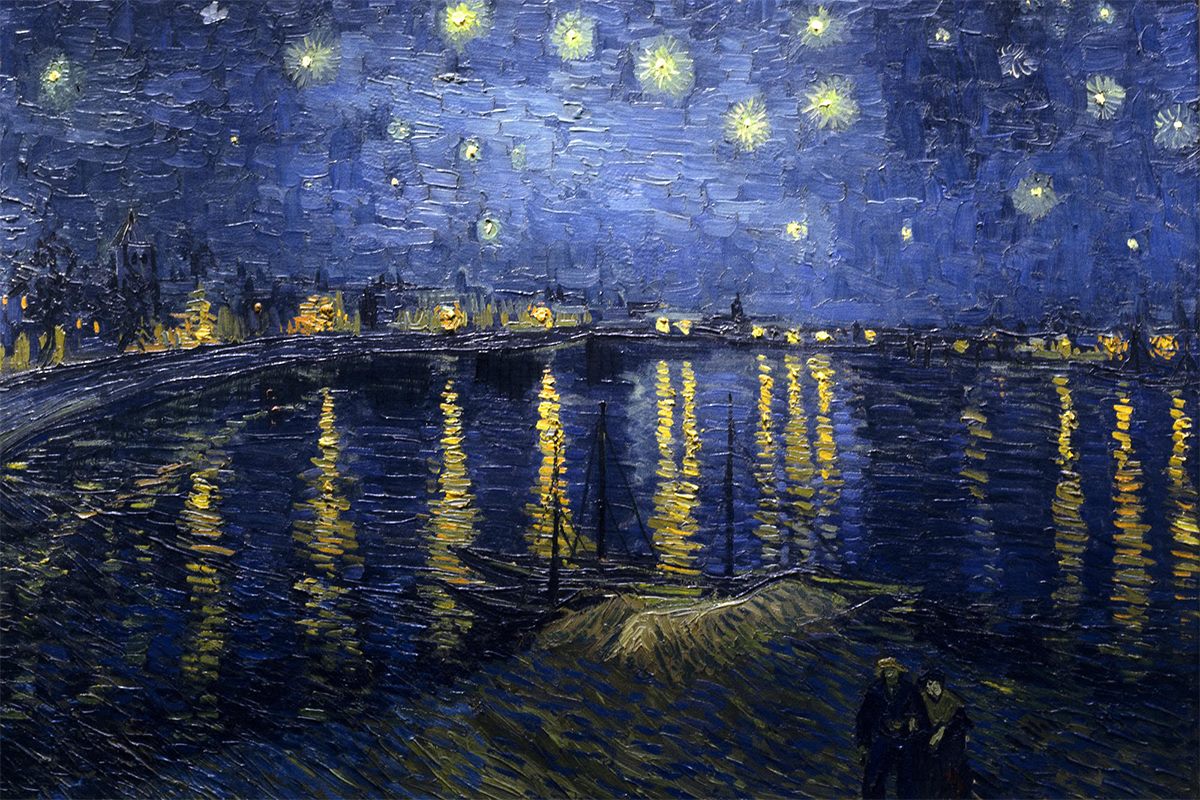
    Some of the updates include a rotating banner on the home page featuring images of a few of Van Gogh’s most famous paintings including Starry Night, Almond Blossom, Wheat Field with Cypresses, Still Life: Vase with Twelve Sunflowers, Self Portrait, 1889, Starry Night Over the Rhone, The Night Café in the Place Lamartine in Arles and The Church at Auvers.  Website visitors will also now be able to read more of Van Gogh’s famous quotes in the rotating feature at the bottom of each page.

    Searching for information on the site is also easier now with the search box in a consistent location on every Van Gogh Gallerypage and easier to read text.  The text on each page is also easier to read now too.

    If you haven’t had a chance to see all of the enhancements, check out the newly redesigned Van Gogh Gallery website. 

    We value your feedback.  Please share your comments with us and let us know what you think of the new design.

    Filed under - Van Gogh News No Comments so far. Add yours now

  • 13
    Sep

    Van Gogh Japonaiserie


    Van Gogh like many of his post impressionist and impressionist contemporaries was influenced by Japanese art. These artists living in Europe at the time, including Monet, Degas, Gauguin and Van Gogh, all admired traditional Japanese art and specifically the Japanese woodblock prints. In 1886, Van Gogh began exploring Japonisme, and by 1887, he had created several works reflecting the bold colors and simple lines known in this style of art.

    Possibly his most famous work to show this style is Almond Blossom, 1890. However, there were several other works that he created that were directly after Japanese artists including Utagawa Hiroshige and Keisaï Eisen. These works include Japonaiserie: Bridge in the Rain (after Hiroshige), Japonaiserie: Flowering Plum Tree (after Hiroshige), and Japonaiserie: Oiran (after Keisaï Eisen) all shown below.

    In a letter to his brother Theo from September 8, 1888 Van Gogh wrote about another famous Japanese artist Katsushika Hokusai, known for his print The Great Wave off Kanagawa, and how he admired his work “Hokusai wrings the same cry from you, but he does it by his line, his drawing; as you say in your letter – the waves are claws and the ship is caught in them, you feel it.”

    Then on September 24, 1888 Van Gogh wrote again to his brother on the topic of Japanese art, “And one cannot study Japanese art, it seems to me, without becoming merrier and happier, and we should turn back to nature in spite of our education and our work in a conventional world.”

    Learn more about Japonisme and Van Gogh.

    Japonaiserie: Bridge in the Rain (after Hiroshige) Japonaiserie: Flowering Plum Tree (after Hiroshige)
    Japonaiserie: Oiran (after Keisaï Eisen)


    Letters Source:

    http://www.webexhibits.org/vangogh/letter/18/533.htm

    http://www.webexhibits.org/vangogh/letter/18/542.htm

    Filed under - Van Gogh Paintings 1 Comment so far. Add yours now

  • 23
    Aug

    Van Gogh in Saintes-Maries


    In 1888, Van Gogh spent some time in Saintes-Maries-de-la-Mer in the South of France. Van Gogh was living in Arles at the time and on May 28, 1888 he wrote to his brother Theo saying, “I expect to make an excursion to Saintes-Maries, and see the Mediterranean at last.” By the first week of June Van Gogh was in Saintes-Maries where he marveled at the sea and its colors. He completed two paintings of the sea both shown below. In a letter to his brother Theo from June 4, 1888 he wrote,

    “I am at last writing to you from Stes-Maries on the shore of the Mediterranean. The Mediterranean has the colours of mackerel, changeable I mean. You don’t always know if it is green or violet, you can’t even say it’s blue, because the next moment the changing light has taken on a tinge of pink or gray.”

    In addition to the two seascapes, Van Gogh also painted: View of Saintes Maries, Three White Cottages in Saintes Maries, Street Scene in Saintes Maries and, probably his most recognized painting from this trip, Fishing Boats on the Beach at Saintes Maries. View his paintings of Saintes Maries below.

    Fishing Boats on the Beach at Saintes Maries View of Saintes Maries
    Three White Cottages in Saintes Maries Street in Saintes Maries
    Seascape at Saintes Maries Seascape at Saintes Maries


    Letters Source:

    http://www.webexhibits.org/vangogh/letter/18/492.htm

    http://www.webexhibits.org/vangogh/letter/18/499.htm

    Filed under - Van Gogh News 1 Comment so far. Add yours now

  • 12
    Aug

    Top Van Gogh Places


    We are frequently asked where are the best places to go to see Van Gogh outside of museums.  The answer to this question really depends on what you want to do; whether it is tour the places in which Van Gogh lived and worked which can still be seen today or go on a bike ride though the French countryside passing Van Gogh landscapes along the way, there are plenty of opportunities to experience the world of Van Gogh.  There are numerous tour companies which host Van Gogh related tours in Europe.  Or you can go on your own walking tour and experience some of the sights that inspired Van Gogh’s masterpieces.   The city of Arles, France has a walking tour that will take you by ten places

    Notre Dame d'Auvers

    Notre Dame d'Auvers located in Auvers-sur-Oise, France

    that Van Gogh captured in some of his most famous paintings including Starry Night Over the Rhone.  Arles also has the Café Van Gogh, L’Espace Van Gogh, and the Langlois Bridge.  If you would rather go back to Van Gogh’s roots, visit the town of Zundert in the Netherlands where you can see Van Gogh’s birthplace and the Van Gogh Church where Vincent’s Father was pastor.   The town of Auvers-sur-Oise in France also gives visitors plenty of opportunities to step back in time and enter Van Gogh’s world.  Visit the Dr. Gachet’s garden, Notre Dame D’Auvers (shown left), or have a meal at the charming Auberge Ravoux and you will be transported back to Van Gogh’s era.      

    View more details on some of the Van Gogh places you can still see today.  Or venture off the beaten path a bit and find some of the spots on your own.  Which Van Gogh places have you seen?  Comment and share them with us.

    Filed under - Van Gogh News 2 Comments so far. Add yours now

  • 29
    Jul

    The Legacy of Van Gogh


    On the anniversary of his death, we remember Vincent van Gogh and the impact that he has had on the world.  From giving us a wealth of masterpieces like his sunflowers, irises and wheat field paintings, not to mention Starry Night, to shaping the world of art, Van Gogh’s impression is a lasting one.  Little did the artist who only sold one painting during his lifetime know that he would go on to inspire countless other artists, to be immortalized in hit songs and have his life story made into numerous films.  Continuing to create works of great beauty even when it may have seemed that few were interested in seeing them took passion, courage and dedication.  Although often inspired by other painters, Van Gogh was more interested in capturing the world around him as he saw it.  In a letter to his brother Theo from July 21, 1882, Vincent wrote,

    “It is not the language of painters but the language of nature which one should listen to…. The feeling for the things themselves, for reality, is more important than the feeling for pictures.”Painter on His Way to Work

    In addition to depicting his world in paintings and drawings, yet another reason that so many feel connected to Van Gogh today is in the pictures he painted with words. The hundreds of letters Van Gogh wrote that have been preserved act as a window into the life of an artist and a period in history when art was changing dramatically.  His letters not only catalog the day to day, but are also filled with poignant passages on life.  Knowing his story though his words gives even more meaning to the work that he created, his development as an artist, and who he was as a person.  Vincent van Gogh remains one of the most recognized artists in history and undoubtedly his legacy will continue to inspire generations for years to come.

    Letters Source:
    http://www.webexhibits.org/vangogh/letter/11/218.htm

    Filed under - Van Gogh in Today's Culture, Van Gogh Quotes No Comments so far. Add yours now


  • Page 1 of 1012345»...Last »
  • Specials

    Free Van Gogh Android App

    LG Cosmo, FREE with new 2yr activation

    Motorola DROID X (CPO)

    Double Heart Pendant in Sterling Silver

  • Van Gogh Links

    Subscribe to the Van Gogh Blog 

    Visit the Van Gogh Gallery Website

    Visit Van Gogh on Facebook

    Visit Van Gogh on Twitter

    Visit the Van Gogh Store for Prints and Posters

  • Topics

    Amsterdam Arles art authentication Auvers bike Drawing Edvard Munch Exhibits fine art prints Gauguin Irises Japonism Japonisme Jean Francois Millet London Museum Nuenen Photo Post Impressioninst Saint Remy spring Starry Night Sunflowers The Scream tour travel Van Gogh Van Gogh Book Van Gogh Gallery Van Gogh Japonaiserie Van Gogh Landscapes Van Gogh Letters Van Gogh Opera Van Gogh Painting Van Gogh Paris Van Gogh Photo Van Gogh Pop Culture Van Gogh Portrait Van Gogh Prints Van Gogh Quotes Van Gogh Self Portrait Van Gogh Still Life Van Gogh Website virtual tour windmill
  • Categories

    • Frequently Asked Questions
    • Jean Francois Millet
    • Paul Gauguin
    • Review my Painting
    • Van Gogh Drawings
    • Van Gogh Exhibits
    • Van Gogh in Today's Culture
    • Van Gogh Landscapes
    • Van Gogh Letters
    • Van Gogh News
    • Van Gogh Paintings
    • Van Gogh Paris
    • Van Gogh Portraits
    • Van Gogh Quotes
    • Van Gogh Sponsors
    • Van gogh Still Life
    • Van Gogh Travel
    • Van Gogh's Health
  • Art Sites

    • Dali House
    • Japonisme
    • Studio of the South
    • Your Daily Art Blog
  • Site Development

    • Content Management System
    • Java Software Design
    • Web Design and SEO Services

RSS Feed

Subscribe to feed
get the latest updates!


Van Gogh Blog © 2012. All rights reserved.